This was the desire of our heart, and the fervent prayer of our church. It started when we were just eight of us, and it stayed our prayer as the Lord blessed our church, year after year. This is the story of that prayer — and an invitation to imagine what it could look like for yours.
My heart behind this
One pastor, to another.
I'm a local pastor, same as you. Vision Church is small, faithful, and rooted in a community we love.
Here is what we came to believe: most local churches are sitting in a community that has never been properly invited. The gap isn't the church's willingness. It isn't the welcome. It isn't, let's be honest, the gospel. It's that the people in the streets immediately around the building simply don't know the door is open.
Like many small churches, we wrestled with how to change that. We didn't have the budget or machinery of a bigger congregation. So we took a risk: if we couldn't knock on every door, could we reach people in their homes through their screens instead? On Facebook. On Instagram. In their living rooms, at the bus stop, on the school run.
It worked. What started as one nervous experiment is now a tried, faith-tested way for a small church to reach its community at scale — and it has worked every single time we've dared to do it.
This isn't a marketing agency wearing a clerical collar. It's one pastor offering another something the Lord has been kind with.
What we've seen at Vision
What that risk has produced.
Three invitations in twelve months, in a real church the size of yours. These are our own Meta figures, laid out honestly.
Christmas carols · Dec 2025
2,068
neighbours shown the invitation
→ around 200 came
Easter family fun day · Apr 2026
2,636
neighbours shown the invitation — seen 10,458 times
→ 200+ came, then a full baptism Sunday
Summer fair · Aug 2026
4,984
neighbours shown the invitation — 50 said they were coming
→ 100+ came, and families joined our youth groups
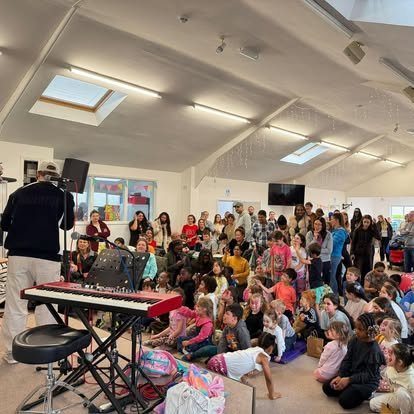
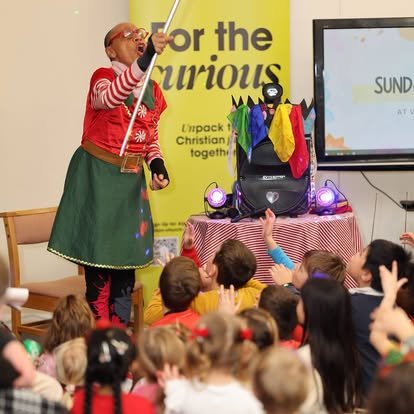
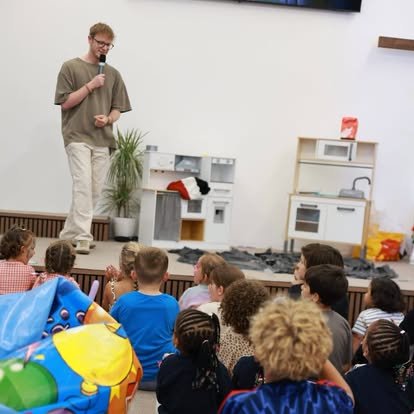
Easter is the one I still find hard to say out loud. One warm invitation — a real photo, plain words, the date — put on the Facebook and Instagram feeds of the families around our building. It was seen 10,458 times by 2,636 of our neighbours; 132 of them responded and 101 clicked through to say they were coming. On the morning, over two hundred adults and children walked through the door. The Sunday after, we held a full baptism service — so full that we had to go and find more chairs.
Christmas brought around two hundred to carols. The summer fair reached nearly five thousand of our neighbours, over a hundred came, and families signed their children up to our youth groups. And the gift behind all of those numbers, five Easters running now: faces from those events still in the building on Sundays, connecting into the life of the church.
What this could look like for your church
Picture it.
A month before Easter, an invitation goes live on Facebook and Instagram, aimed precisely at families in the postcodes immediately around your building. Over thirty days your event is seen, and seen again, and again, by thousands of your neighbours.
They click. Some visit your social pages, freshly tended for the campaign. Some look at your website, now a calm, welcoming front door rather than a dusty corner of the internet. A handful message you. More than that turn up on the day.
Easter passes. Families have been through your doors. Several are still around in May, in June, in July. By summer you run it again. Then harvest. Then Christmas. Four moments a year, building a rhythm, building relationships, building a church that's no longer invisible to the streets around it.
It doesn't require a bigger team, a bigger building, or a bigger budget. It requires a postcode, a heart for it, and someone to take the work of the campaign off your plate.
That last part is what Digital Gospel is for — and alongside the campaign itself comes the Vision Blueprint: five years of hard-won lessons on organising the day, mobilising your volunteers, and structuring the event so families don't just turn up, they want to come back.
Let's talk
Twenty minutes, no pitch, no pressure.
I'll walk you through what we did at Vision, listen to where your church is, and only if it's the right fit, we'll talk about what's next.